AI Overview
Choosing a hotshot for mine-site freight is not the same as booking a courier - the questions that matter are mine-spec vehicle compliance, whether 24/7 dispatch is genuinely staffed or just a voicemail box, and whether the operator carries the right freight liability and public liability cover. Operators who cannot answer those three questions clearly are not set up for mine work, regardless of what their website says.
- Mine-spec compliance covers reversing cameras, fire suppression, first aid, and pre-start records - ask to see the checklist, not just a verbal assurance
- 24/7 dispatch means a person answers at 2am - test it before a breakdown, not during one
- Fleet range matters: a one-ute operator cannot handle a pallet of parts or a tilt-tray load
- Freight liability insurance should cover the value of the parts you are sending - confirm the limit before you book
- Driver induction history on your regular sites reduces gate delay risk significantly
- Communication during a run means proactive updates, not just answering when you call
The WA hotshot market ranges from solo operators running a single ute to structured operations with a mixed fleet, mine-site inductions, and proper dispatch. Both can call themselves hotshot companies. Only one of them will get through your mine gate without a problem.
This guide covers the questions that separate mine-site-capable operators from general couriers who have added 'urgent freight' to their website. Ask these before you book - not after a failed delivery.
Nothing in this list requires a degree in logistics. It is the checklist an experienced site procurement or maintenance planner runs through when they are assessing a new transport supplier.
Mine-Spec Vehicle Compliance - Ask for the Checklist
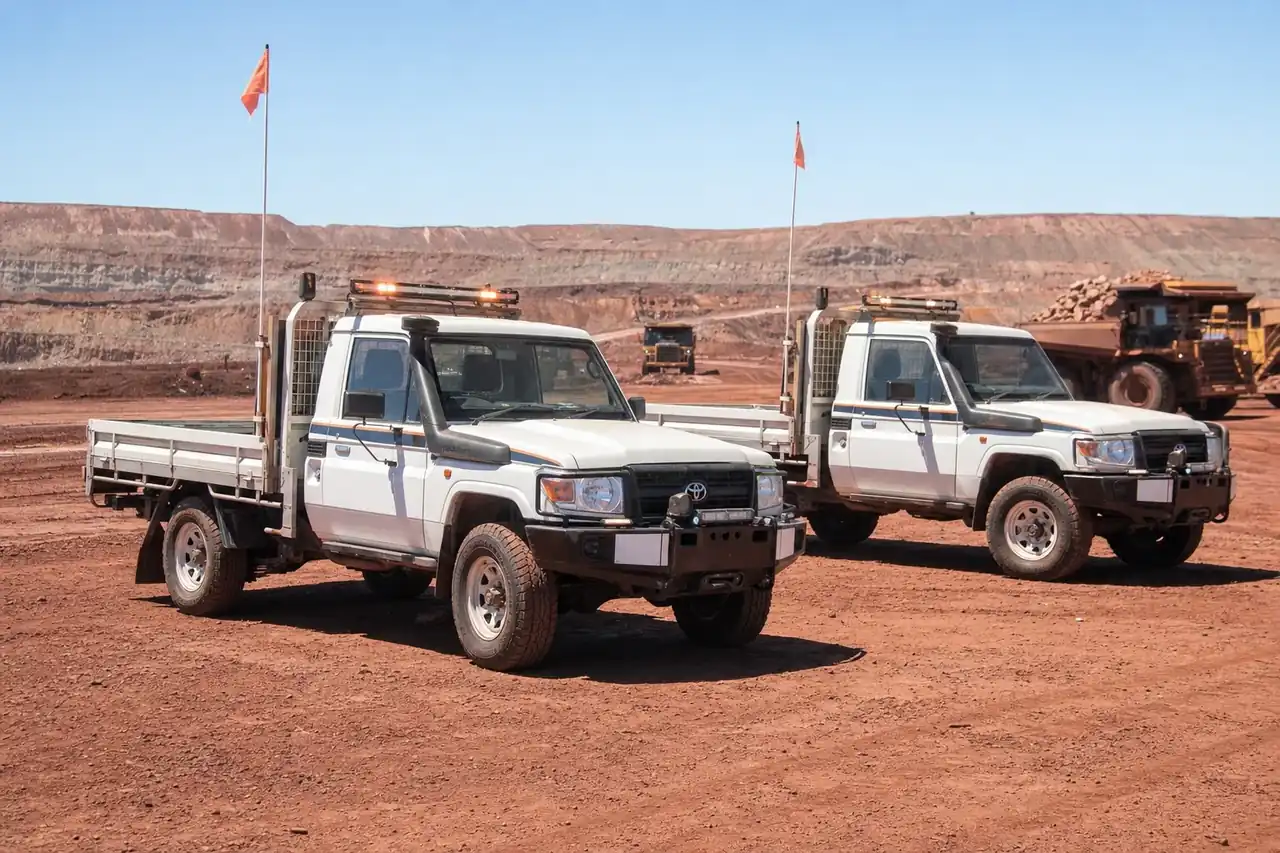
Mine sites in WA require contractor vehicles to meet a defined standard before they are allowed through the gate. The exact requirements vary by site, but the baseline is consistent: reversing camera, fire extinguisher, first aid kit, wheel chocks, and a current pre-start inspection record.
Ask the operator to confirm which mine sites their vehicles are currently cleared for and what their vehicle pre-start process looks like. An operator who cannot answer this specifically has not been through the process - which means their vehicle may not pass your site's gatehouse inspection.
What Mine-Spec Actually Includes
- Reversing camera - a functional, clearly mounted unit, not a cheap aftermarket clip-on
- Fire extinguisher - correct class, current service date, mounted in an accessible position
- First aid kit - stocked and within expiry, stored in a standard accessible location
- Wheel chocks - compliant size and material for the vehicle class
- Pre-start inspection record - completed at the start of every shift, available for gate inspection
- Communications equipment - UHF radio on the standard mine channel for site traffic
- High-visibility clothing - driver has compliant hi-vis for the relevant site standard
Ask for the pre-start form, not just a yes
A genuine mine-spec operator will have a documented pre-start checklist they can send you. If the answer to 'are your vehicles mine-spec?' is just 'yes, of course', ask to see the form. Operators who run proper pre-starts can produce the document immediately.
24/7 Dispatch - What It Should Actually Mean
Most hotshot companies list '24/7' somewhere on their website. In practice, '24/7' can mean anything from a permanently staffed dispatch operation to a mobile that goes to voicemail after 9pm and gets checked in the morning.
Mine-site breakdowns do not wait for business hours. Before you rely on a new operator, call their dispatch number at an unusual hour - a weeknight at 10pm or a Sunday morning. If someone answers and can confirm availability for a run, you have a real 24/7 operation. If you get voicemail, you know what you are working with before a breakdown test reveals it.
What to Expect When You Call
A staffed dispatch operation can confirm vehicle availability, driver induction status for your site, and a realistic departure window in a single call. If the person answering needs to call you back after checking with the driver, that is fine - but the initial call should yield real information, not a placeholder.
- 24/7
- Staffed dispatch - person answers, not voicemail
- Direct
- Departure confirmed on the call, not after callbacks
- Mine-spec
- Vehicle compliance confirmed before booking is locked
- Insured
- Freight liability and public liability - ask for limits
Fleet Range - Can They Handle Your Load?
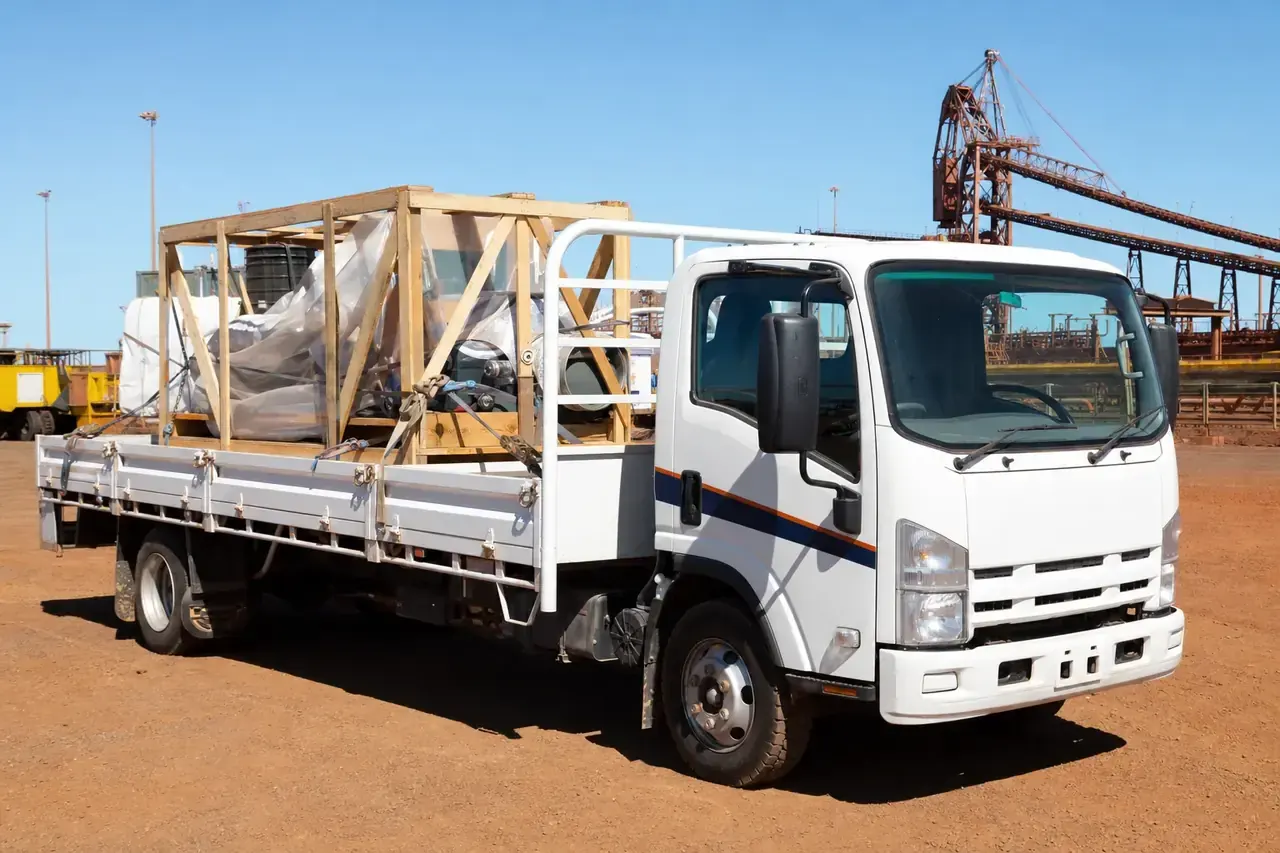
A single-ute operator is fine for small, light breakdown parts - sensors, control units, seals, small bearings. They are not the right call for a pallet-sized load, a tilt-tray requirement, or anything that needs a truck with a rated flatbed.
Before you have a breakdown, understand what fleet configurations your hotshot operator actually runs. A mixed fleet covering utes, 3.5-tonne trucks, and tilt trays means you can use one supplier for the full range of urgent freight your site generates - not just the small stuff.
| Load Type | Suitable Configuration | What to Ask |
|---|---|---|
| Small parts, sensors, electronics | Ute or small van | Can it fit in the tray/cargo area with secure strapping? |
| Medium components, pump assemblies | 3.5-tonne rated flatbed | Is the flatbed rated for the load weight and does it have tie-down points? |
| Large equipment, hydraulic units | Tilt-tray or heavy truck | Does the operator own or sub-contract? Sub-contracting adds delay. |
| Multiple items in one run | Depends on combined weight | Confirm the operator can handle consolidated loads - some can, some can't. |
Match load type to fleet configuration before booking - not after the driver arrives.
Insurance - Freight Liability and Public Liability
If the part is damaged in transit, who wears the cost? The answer depends entirely on what insurance the operator carries and whether your load is covered under their freight liability policy.
Ask for the freight liability limit and the public liability limit before you book. If the part you are sending is worth significantly more than the freight liability cover, you have a gap. Some operators carry low limits because they primarily move low-value cargo - that is not appropriate for high-value mining parts.
Low freight liability limits are a common gap
A hotshot operator who primarily does general courier work may carry freight liability cover that is adequate for parcels but not for a replacement drive unit worth tens of thousands. Confirm the limit covers the replacement cost of the parts you are sending, not just a nominal amount.
Driver Induction History - Reduces Gate Risk
An operator who services your mine sites regularly will have drivers with established induction history on those sites. That means the gatehouse has them in the system, the induction expiry dates are managed, and there is no first-visit delay.
When you are assessing a new operator, ask specifically which mine sites in your region their drivers hold current inductions for. An operator with no presence on your regular sites is not automatically a problem - inductions can be arranged - but you need to factor that lead time into your planning.
Communication During a Run - Proactive, Not Reactive
When a site is down and a part is on the road, the maintenance team wants position updates - not because they can make the truck go faster, but because it changes what they can plan around. An operator who calls proactively when a delay occurs is worth more than one who only reports when you chase them.
Ask the operator how they handle communication on a run. A specific answer - 'driver calls the site contact on departure and again two hours out' - is a sign they have thought about it. A vague answer is a sign they have not.
What to Ask Before You Book - The Checklist
- 1
Mine-spec compliance
Ask for the vehicle pre-start checklist and confirm which mine sites their vehicles are currently cleared for. If they cannot name specific sites, they have not been through the process.
- 2
Dispatch availability
Call outside business hours before you have a real breakdown. A person should answer. If voicemail, note it.
- 3
Fleet range
Confirm the operator has the right vehicle configuration for the load types your site generates - ute, flatbed, tilt-tray. Understand whether they sub-contract for larger loads.
- 4
Insurance limits
Request the freight liability and public liability limits in writing. Confirm the freight limit covers the replacement cost of your parts.
- 5
Driver induction status
Ask which of your mine sites their drivers hold current inductions for. Plan the lead time for any site where they do not.
- 6
Communication protocol
Ask specifically how they handle updates during a run. A documented protocol is better than a vague commitment.
Need a hotshot moving now?
Our dispatch team is on 24/7. Tell us what's stopped and we'll get it rolling.
Call (08) 6103 5089FAQs
Ask them to send you their standard vehicle pre-start checklist and to confirm which mine sites their vehicles are cleared for. A compliant operator has this documentation and can send it immediately. If they cannot, that tells you something.
A mine-site-capable hotshot operator has vehicles fitted to site access standards, drivers with site inductions, freight liability insurance adequate for high-value parts, and genuine 24/7 dispatch. A general courier has none of those things - they just have a van and a delivery app.
Yes, but it takes time. Site-specific inductions are arranged through the mine's training coordinator - they cannot be done on the day. If you are considering a new operator for a site they don't currently service, build that lead time into your planning.
It should cover the replacement value of the part, not a nominal freight value. If you are sending a component worth tens of thousands of dollars, confirm the operator's freight liability limit covers that amount. If the limit is low, arrange your own goods-in-transit cover before the run.

Mr Hot Shot
Perth-based hot shot transport built around time-critical mining and industrial freight across Western Australia - not general courier work.